A growing room can look highly automated and still lose money through inconsistent nutrition. A precise lighting schedule, climate controls, and quality genetics cannot fully compensate for nutrient delivery that varies from zone to zone or drifts from the intended recipe. That is why controlled environment agriculture trends increasingly center on the systems that move water, nutrients, and data to the root zone.
For commercial growers, the question is not whether controlled environments will become more technical. They already have. The practical question is which investments produce more uniform growth, lower input waste, and stronger operating control without creating unnecessary complexity. Fertigation is central to that answer because it turns irrigation into a repeatable plant-feeding process rather than a water event followed by separate fertilizer applications.
Controlled Environment Agriculture Trends Are Becoming More Precise
Controlled environment agriculture includes greenhouses, indoor grow rooms, propagation facilities, container production, and other operations where growers actively manage plant conditions. These operations have different crops, capital budgets, and production targets, but they share a common pressure: every input must perform.
Nutrient programs are moving away from broad, infrequent applications and toward smaller, more frequent doses delivered with irrigation. This approach better matches the way plants take up water and nutrients. Rather than applying a heavy concentration and hoping it remains available through the next cycle, growers can deliver a measured amount when the crop needs it.
The operational benefit is consistency. Frequent, light fertigation can reduce swings in root-zone conditions, limit nutrient loss, and help maintain a more predictable crop response. In high-value production, predictable growth is often more valuable than simply applying more fertilizer. Uniformity supports scheduling, labor planning, crop quality, and market timing.
The trade-off is that precision requires dependable equipment and disciplined setup. A poorly designed injection system, weak water source management, or uncalibrated sensor can spread an error quickly. Precision is not just about adding controls. It is about ensuring that flow, injection rate, pH, EC, and nutrient concentration work together as one managed process.
Nutrient Recipe Flexibility Is Replacing One-Size-Fits-All Feeding
Growers are managing more variables within the same footprint. A greenhouse may have propagation benches, vegetative plants, flowering crops, and finishing zones with different nutritional needs. An indoor farm may run multiple cultivars, staggered harvest dates, or seasonal adjustments in the same facility. One injector and one stock solution can become a production limitation.
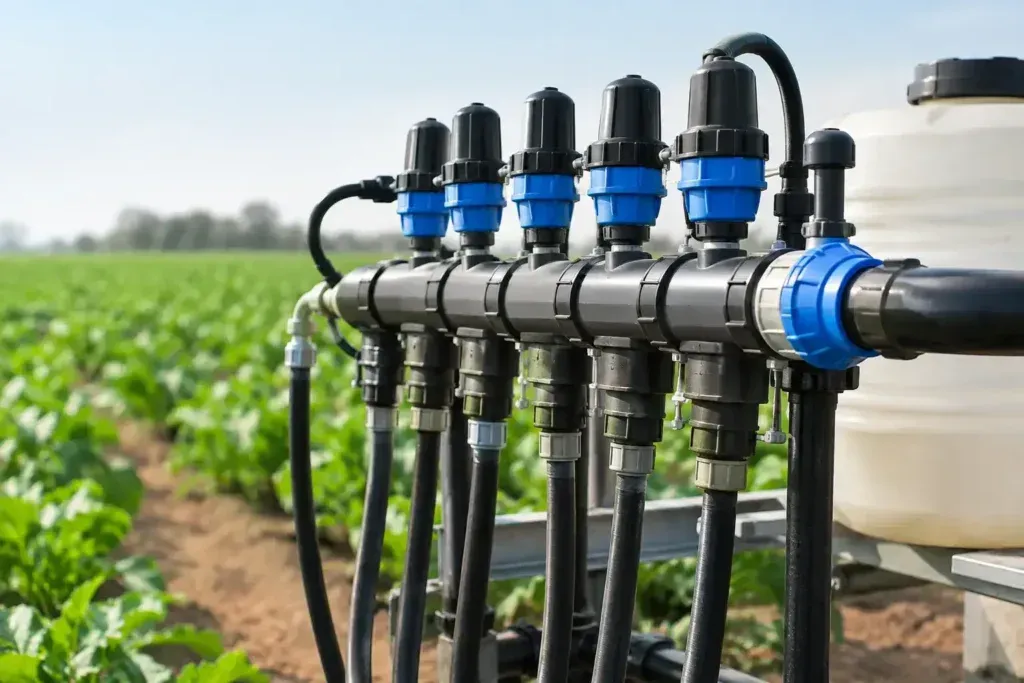
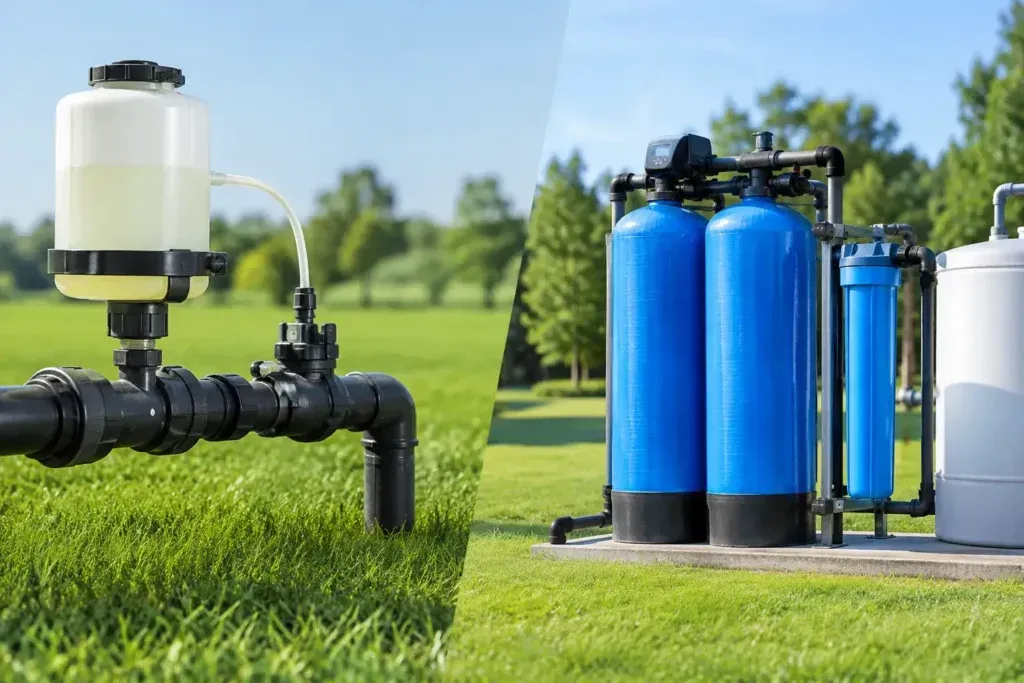
Multi-injector fertigation systems are gaining attention because they allow operations to build nutrient programs around actual crop stages and water conditions. Separate injectors can accommodate base nutrients, calcium, micronutrients, acids, growth-support products, or crop-specific additives without forcing every zone into the same recipe.
The right number of injectors depends on the operation. A smaller growing area with a stable crop program may need a simpler two-injector configuration. Larger facilities or operations running multiple crop recipes may benefit from four, five, or eight injectors. More injectors provide flexibility, but they should solve a clear operational need. Buying capacity that will not be used adds cost and maintenance without improving crop results.
This trend also reflects a broader shift in purchasing decisions. Growers are evaluating fertigation equipment as production infrastructure, not as an accessory to irrigation. The system must be able to adapt as crop mix, water quality, regulations, and production targets change.
EC, pH, Flow, and PPM Are Operational Measurements
In a controlled environment, measurement matters because visual symptoms appear after performance has already declined. EC provides a useful indicator of total dissolved salts in the solution. pH affects nutrient availability. Flow confirms that water is moving at the expected rate, while PPM measurement helps operators verify concentrations and maintain recipe targets.
None of these readings should be managed in isolation. A target EC can look correct while the individual nutrient ratios are not appropriate for the crop. A correct injection setting can still deliver the wrong result if source-water alkalinity shifts or flow changes across irrigation zones. The goal is not to chase numbers. It is to use those numbers to confirm that the intended nutrient program reaches the plant.
This is where equipment design matters. Purpose-built fertigation systems that integrate monitoring and injection control give growers a clearer view of what is being applied. That can simplify troubleshooting when growth becomes uneven, when a water source changes, or when a new crop recipe is introduced.
Water Efficiency Depends on Root-Zone Control
Water scarcity, rising utility costs, and discharge concerns continue to shape controlled environment investments. Many growers are improving irrigation scheduling, using moisture sensing, and evaluating recirculation strategies. Those efforts are worthwhile, but water efficiency is incomplete if the nutrient program is not aligned with the irrigation program.
Overwatering can leach nutrients past the active root zone. Underwatering can concentrate salts and restrict uptake. Fertigation gives operators a way to manage water and nutrition together, using irrigation events to deliver the intended concentration in smaller, more controlled intervals.
Recirculating systems can further reduce water and fertilizer use, but they introduce a different set of management requirements. Return water must be monitored for EC, pH, pathogens, and nutrient imbalance. Some operations will find that recirculation produces meaningful savings. Others, particularly those with variable crop inputs or strict sanitation concerns, may choose a drain-to-waste strategy with precise application and runoff management instead.
The best approach depends on crop value, local water costs, source-water quality, discharge rules, and labor capacity. The common principle is straightforward: apply what the plant can use, measure the result, and avoid treating runoff as an unavoidable cost of production.
Automation Is Moving From Convenience to Accountability
Automation in controlled growing environments is often discussed in terms of labor savings. Labor matters, but the greater value is repeatability. A manual mixing process can work well with a highly experienced operator, yet it is vulnerable to shift changes, skipped steps, transcription errors, and inconsistent calibration.
Automated nutrient injection makes the feeding program more repeatable from one irrigation cycle to the next. When paired with documented recipes and regular verification, it also creates accountability. Managers can compare setpoints to actual readings, identify drift early, and understand whether a crop issue is related to irrigation, nutrition, or another environmental factor.
The most useful automation is not necessarily the most complicated system. It is the level of control that an operation can maintain. A grower with limited technical staff may be better served by a configurable, clearly labeled system with essential monitoring than by an overbuilt platform that is difficult to troubleshoot. Reliability, service access, and operator training remain part of the return on investment.
Energy Economics Are Changing the Investment Conversation
Indoor production faces a particular challenge: energy can be one of the largest operating costs. Lighting, HVAC, dehumidification, pumping, and water treatment all affect the cost per pound, plant, tray, or square foot. That reality has made growers more selective about capital investments.
Fertigation does not eliminate energy costs, but it can protect the value of the energy already being spent. When a facility invests heavily in climate and lighting, inconsistent nutrient delivery can prevent crops from responding to those controlled conditions. Accurate feeding helps turn environmental control into plant performance.
The financial case should be measured beyond fertilizer price. Consider reduced chemical and nutrient waste, lower labor tied to manual mixing and application, fewer corrective treatments, improved crop uniformity, and water savings. In turf applications, frequent light feeding can reduce fertilizer and chemical use by 50% or more in the right program while directing up to 95% of nutrients to the plant. Controlled growing operations should evaluate similar efficiency opportunities based on their own crop, irrigation design, and current losses.
What Growers Should Prioritize Next
The strongest controlled environment agriculture programs are not built around a single trend. They are built around a connected operating system: reliable water delivery, accurate nutrient injection, usable measurements, adaptable recipes, and staff who understand what the data means.
Before expanding automation or adding new production zones, review the basics. Confirm source-water quality, verify flow across zones, calibrate injectors and sensors, document crop recipes, and compare applied nutrients with crop response and runoff. Those steps often reveal where money and production consistency are being lost.
For operations ready to improve control, a configurable fertigation platform can create a practical path forward. Turf Feeding Systems designs nutrient-injection equipment around the number of recipes, monitoring needs, and operating conditions a professional growing program actually requires.
The useful trend to follow is not technology for its own sake. It is the continued move toward giving every irrigation cycle a defined purpose: deliver the right water, the right nutrients, at the right rate, where the plant can use them.